Contrary to what is often said, humans did not come from apes. Humans are apes. Studies on primates have shown this for over a century. Modern genetic science supports this truth. While we share about 50 percent of our DNA with a banana, we share approximately 98 to 99 percent with chimpanzees. We share significant amounts of genetic material with many other species as well. This shows that we are connected to every living thing around us. However, it is an unchangeable fact that our closest living relatives are not Homo erectus, as commonly believed, but the great apes.
So what is the difference that lies in the remaining one percent? What makes us human?
As humanity entered the 21st century, the world became a place defined by greed, enormous inequalities between rich and poor, racist and nationalist prejudices, brutal practices, and devastating wars. It is very easy to believe that things have always been this way and therefore cannot be any different. This belief is often reinforced by many politicians, sociologists, and psychologists. They portray hierarchy, obedience, greed, and violence as if they are inherent parts of human behavior.
Some go as far as to argue that these behaviors are socio-biological necessities imposed by the genetic laws of the animal kingdom. Many popular science books support this perspective. Desmond Morris refers to humans as the “naked ape.” Robert Ardrey writes about a so-called “killer instinct.” Richard Dawkins suggests that all of these traits are driven by what he calls the “selfish gene.”
Today, chimpanzees have been taught around 900 words. However, they are unable to create new meanings by combining these words in ways that resemble human grammar. Could language be the only true difference? We know that their methods of communication have long differed from ours. But grammar, the structural system of language, appears to be uniquely human. Perhaps this is where our misunderstanding of true communication begins. We may know grammar, but we do not necessarily understand communication. And perhaps we also struggle with honesty.
Another defining difference is our ability to diversify ourselves. This can be described as learning how to survive under a wide range of conditions. The ability to expand survival strategies was evident in Homo erectus, our distant ancestor. It is believed that Homo erectus joined other groups and migrated to survive, learning many new skills along the way. Although other species may share a high percentage of our DNA, their survival strategies are limited to stable environments they have adapted to. For example, if an animal adapted to northern climates were placed in the south, it would not be able to survive. Today, humans are the only species capable of adapting to almost any environment.
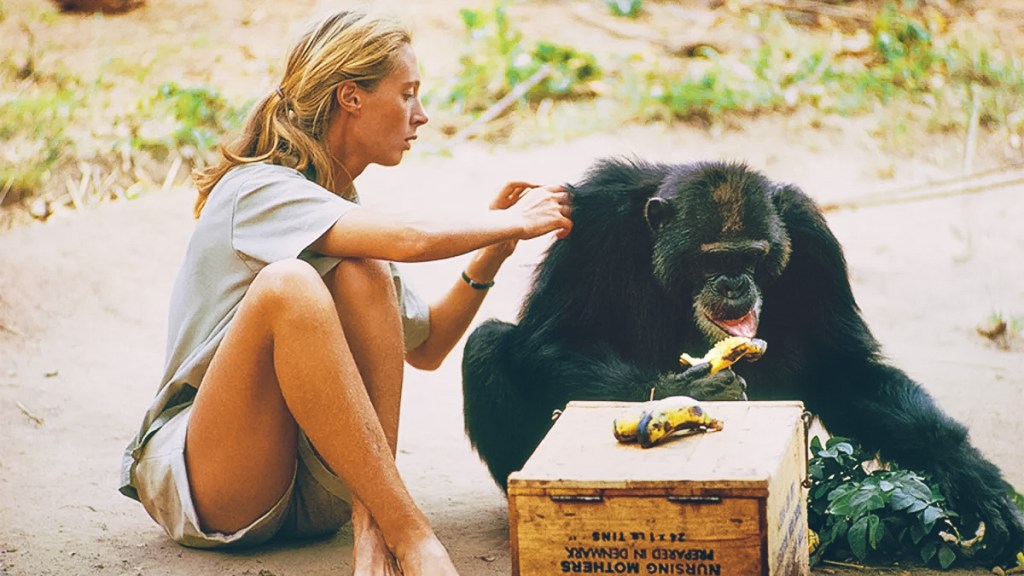
Although there are theories, we still do not know exactly when we acquired these two core abilities: symbolic language and environmental adaptability. We may not have evolved directly from the creature we call a monkey, but it is an undeniable fact that we are cousins. From seven million years ago to about one hundred thousand years ago, there was a long evolutionary process that we now understand better than ever. During this time, humans gained many unique traits such as walking upright, developing language, and creating varied survival methods.
After all, has not every living being come from an explosion, from a single-cell organism, and from an increasingly complex structure?
These thoughts, shaped by the many things I have read and watched, are what I wanted to share here.
I hope they have not bored you.

 Özgür Kalender
Leave a comment